

6 MLCC Questions Everyone Is Asking — SemiVision Explains
Original Article By SemiVision Research [Reading time: 14 mins]


RAISE is the world’s leading AI summit, bringing together 9,000 AI leaders, C-suite executives, startups, investors, and policymakers. With President Emmanuel Macron addressing the summit, it reflects AI’s growing importance at the highest levels of policy, industry, and investment.
6 MLCC Questions Everyone Is Asking — SemiVision Explains

In the AI server supply chain, the market naturally focuses on GPUs, HBM, CoWoS, switch ASICs, liquid cooling, power architecture, and high-speed connectors.
But in many cases, what determines whether a system can operate reliably is not the most expensive chip. It is often the small, high-volume, high-spec, low-substitutability components that used to be treated as “standard parts.”
MLCC is one of them.
Since April 2026, MLCC channel prices have shown a clear upward trend. The core driver is not a shortage of one single specification. It is the combined effect of AI server demand growth, VR200 platform upgrades, data center power architecture changes, and limited high-end Japanese supply.
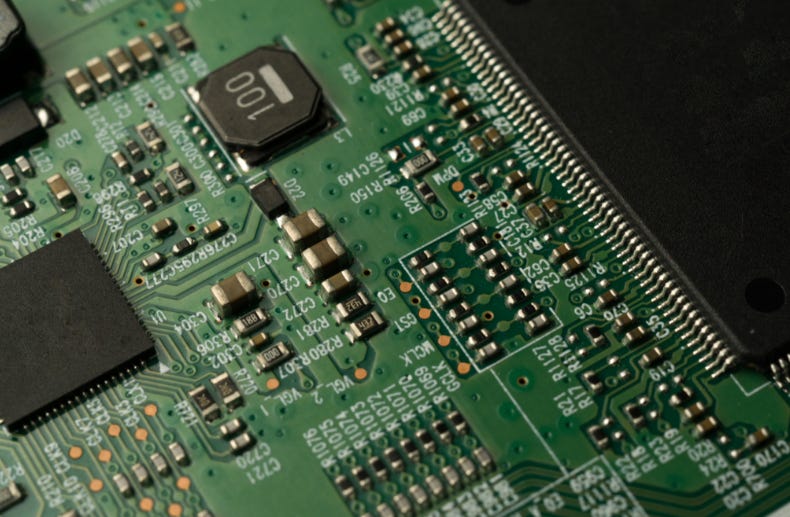
This MLCC cycle is not simply a consumer electronics restocking cycle. It is also not a full repeat of the 2018 broad-based passive component price surge. It looks more like a structural demand spillover caused by AI system architecture upgrades.
In one sentence:
MLCC is shifting from a consumer electronics cycle component into a high-reliability, high-value, high-specification component inside AI server platforms.

Below we will answer:
Q1: Why AI Servers Are Pulling MLCC Demand Higher?
Q2: Why This Is Not Simply a Repeat of 2018?
Q3: Why Low-Capacitance MLCC Has Not Risen Across the Board?
Q4: VR200, GB300, and Rubin: Will AI Platform Upgrades Reduce MLCC Demand?
Q5: Implications for Yageo, PSA, and Taiwanese MLCC Suppliers?
Q6: How Long Can This MLCC Cycle Last?
SemiVision Views
